I'M SEARCHING FOR MY FIRST ROUND OF BETA CLIENTS!
WANT TO BE INVOLVED?
THE ALCHEMY OF
Successful
STORYTELLING
FOR THOSE LOOKING FOR THE EDGE TO CATAPULT ORDINARY TO OUTSTANDING.
Learn the details that drive depth, which drive trust, which drive sales.
Are you looking to make an impact — big or small — with your audiences, clients, or readers?
Are you searching for a strong connection that specifically reaches people through your words?
Are you looking to deepen your writing and make content that's memorable and meaningful?
THE ALCHEMY OF STORYTELLING — STRAIGHT TO YOUR INBOX
This is your invitation to receive weekly tips from an accredited journalist about how to best practice, improve, and master the art of storytelling, and writing with authenticity.
Note: This is by no means limited to the travel sector or luxury clients.
This newsletter focuses on how to resonate with anyone that’s human, and outlines how to weave authenticity into your own written communication no matter your niche or subject.
If you’re writing, blogging, producing thoughtful stories, or pursuing any type of communicative content, these are tips that you can use in your own business and are designed to help get your cogs whirring and creative juices flowing.
Each insightful email revisits the fundamentals, offering educational approaches and storytelling principles to create lasting impact for readers — ultimately leading to more trust, confidence, or repeat custom from your audience.
Moreover, this is aimed at anyone who wants to make their work stand out from the rest... especially in an AI and 'artificial' era.
No sleazy sales tactics, and absolutely zero Chat-GPT regurgitation. This is from one human to another!
Subscribing to this educational newsletter promises to:
• Help you fine-tune your content output
• Be human-focussed and soul-led
• Strengthen your ability to express
• Develop precise messaging and descriptive techniques
• Provide easy ways to appeal to your target audience
• Improve the ability to write more deeply and thoughtfully
• Demonstrate how to create impact that plants the seeds for sales
Bonus: Includes an invitation to reply with a copy question each week in order to receive human, perceptive feedback.
My work is infused with emotional value- senses of
wonder, honesty, and deep human connection.
Deepen your writing, and your connection with others will follow.
Drop your details below to sign up to The Alchemy of Storytelling waitlist.
The series is still being developed, but by being on this waitlist you'll be the first to receive the content whenever it's due to go live!
LET'S COMPOSE resonant, IMPACTFUL WORK TOGETHER.
About your new Writer...
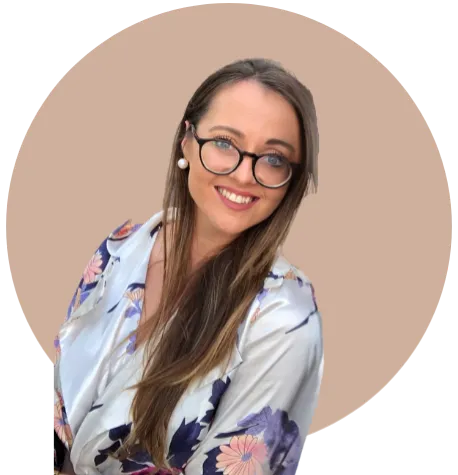
Francesca is a dedicated writer and publication expert with a Bachelor's degree in Journalism, extensive media experience, and over a decade in handling and sharing powerful stories.
Partnering with select clients to ensure high-quality editorial support and exceptional long-form results, Francesca transforms brand narratives into captivating nonfiction and timeless literature. Her talents include a commitment to professionalism, a strong understanding of people, and an insatiable interest in evocative writing and connective storytelling.
After graduating with Honors, she began honing her speciality in long-form narratives through her travels and career experience in hospitality. She continues her passions with connecting people to enriching experiences and reaching audiences through the written word.
Promising meaningful work crafted with precision and heart, Francesca ensures her writing weaves gripping narratives, compelling value, and emotive substance -- always with the aim to leave readers with a lasting impact.

The Exact Moment I Knew I Didn't Want to Be A Journalist... After Signing Up To A £12k Degree
After a gruelling entry system and a big effort to move three hours from home to further my education, all it took was the very first hour of the very first class to know I didn't want to be a journalist.
I remember it well.
Ethics class.
Early morning.
Our first debate and topic of the day was regarding morals, including the decision and commitment you must make as a journalist.
Sounds easy, right? I have morals. I like journalism.
Well, this actually required something bigger.
Are you going to be loyal to the people, the truth, and the unfolding story?
Yes?
Then you must disregard some loyalty to your own humanity.
Suppressing the Natural Instincts
In the following unfolding debate, we were asked to picture ourselves as investigative journalists in a war-torn environment — terror, bombs, poverty, any challenging or horrifying scenes.
The well-known styles of Pulitzer Prize photojournalism from those environments depict things like starving children with protruding bones, details of dried blood in the wrinkles of a crying man, or capturing open-mouthed, silent wails of a grieving mother.
But you can never help, or intervene.
It's a similar principle with nature studies and wildlife journalism. You know the circle of life and the food chain, and you know what happens when a predator stalks the young.
Perhaps you and your team spent weeks studying the mother and watching the miracle of birth in awe and wonder, against all odds, watching from behind the curtain the incredible and tender moments of her raising and protecting them.
But the predator still looms, and it too requires the right to eat and stay alive.
You can never help, or intervene.
And likened again with humankind, you can never stop the killing, or the fight with evil, or the outcome... your job is to simply be the bystander, the capturer, the reporter, and the vessel to depict and portray moments exactly as they happen, exactly how things unfurl, naturally.
A fly on the wall.
An invisible barrier between real life and your role of just observing it.
Even if that doesn't feel natural at all.
So when you're inches from real human pain, most journalistic situations require that you cannot overstep the threshold and do the humane action — help.
Instead, you have to take the photos. Record the story. You have a duty to report and relay it back to the people, as documented as possible. You have to soak it in, assess the details, absorb the narrative, and convey the accuracy. And, you have to have enough to write about it fully later.
Commitment to Myself, or My Role?
I never considered that journalism would physically strongarm my morals, quenching my humanity and challenging my natural instincts.
But that requirement wasn't only in extreme environments either — your loyalty is always demanded for your local newspaper, media outlet, or news station.
A man mauled by a dog on a walk in the park.
A grandma that had her life savings stolen.
A family that lost their little girl to a murderer.
Whatever the situation, your creed as a journalist would ensure being the first on their doorstep and interviewing for their recounts, opinions, quotes, and context.
'News' literally means the reporting of the most recent events and occurrences — significant or sometimes otherwise — ensuring being up-to-date and delivering new information that wouldn't otherwise be known.
If the family told you they couldn't talk? The grandma wanted privacy? The man needed recovery time in the hospital to recover and recuperate?
Tough.
Your station would send you right back and be expecting you to be the first to claim the details and the story too, often in a harsh battle against other news stations to break the story first.
It never sat right with me. I guess my humanity prevails, and after that one-hour class, I think I had a different lens of which I also viewed the world.
Now, I work with artistic freedom and enjoy injecting heart and soul into my work too, instead of simply relaying facts or remaining indifferent in tone.
I also commit strongly to my morals — one of those being my commitment to authenticity vs artificiality in my writing. (Want to work together? View my services here.)
Keep carving your pathway, and staying true to you.
-fe